Terragni: The Unpublished Designs
An article of mine originally published on reFRAME in November 2022.
Almost a century has passed since Giuseppe Terragni, widely regarded as the leading exponent of Italian architectural Rationalism, began his career as an architect in Como. He began studying architecture in 1921 and graduated in 1926. Soon afterwards, he formed Gruppo 7, which, in 1927, published the four articles in Rassegna Italiana that are considered the manifesto of Italian Rationalism.
As an architectural movement, Rationalism formed part of the broader international movement that developed between the two World Wars and became known as the Modern Movement. Although the latter explicitly sought to transcend national differences in taste, it gave rise to various local currents, each developing distinctive characteristics within its own geographical and cultural context.
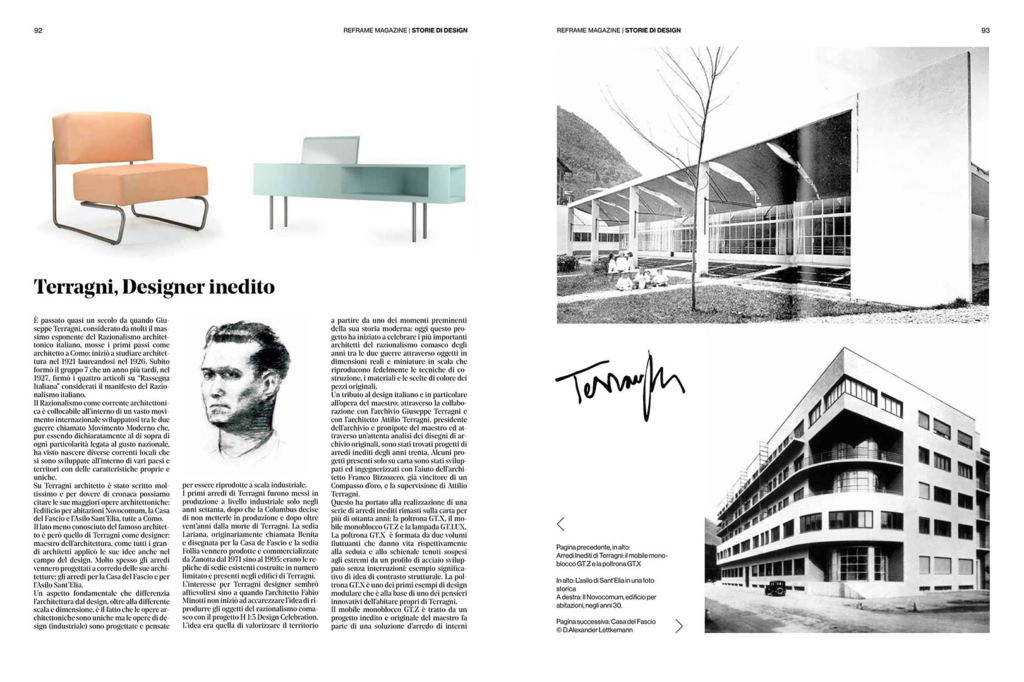
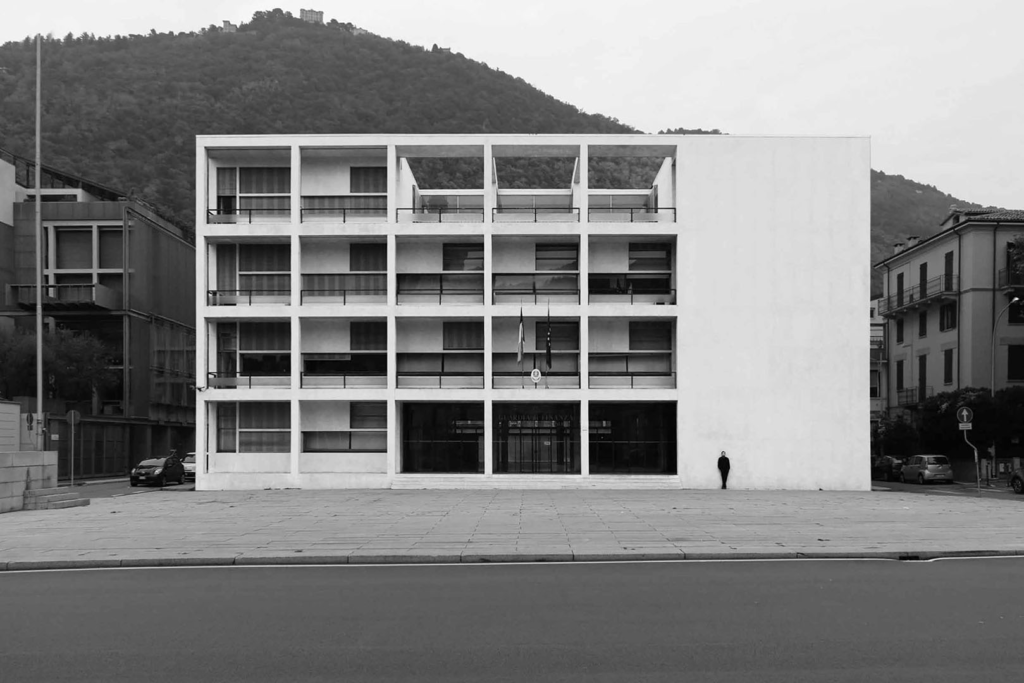
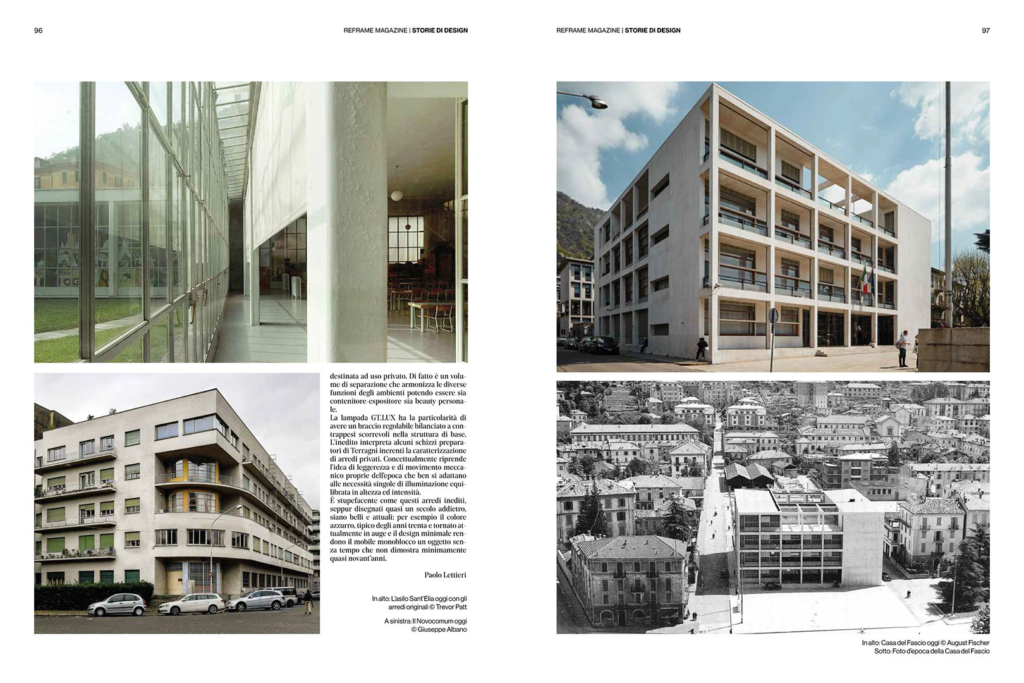
A great deal has been written about Terragni as an architect. To mention just a few of his most important works, there are the Novocomum residential building, the Casa del Fascio and the Sant’Elia Nursery School, all in Como.
A lesser-known side of this celebrated architect, however, is his work as a designer. Like many great architects, Terragni extended his ideas into the field of design. His furniture was often conceived specifically for his architectural projects, including the furnishings for the Casa del Fascio and the Sant’Elia Nursery School.
One fundamental difference between architecture and design, beyond their distinct scales and dimensions, is that architectural works are generally unique, whereas industrial design products are conceived and developed for mass production.
Terragni’s furniture did not enter industrial production until the 1970s, more than twenty years after his death, following Columbus’s decision not to manufacture the original designs. The Lariana chair, originally called Benita and designed for the Casa del Fascio, and the Follia chair were produced and marketed by Zanotta from 1971 to 1995. They were reproductions of existing chairs, originally made in limited numbers for Terragni’s buildings.
Interest in Terragni as a designer appeared to fade until architect Fabio Minotti began exploring the idea of reproducing objects from the Rationalist tradition of Como through the H 1:5 Design Celebration project.
The aim was to celebrate the local area by drawing on one of the defining moments in its modern history. Today, the project pays tribute to the leading architects of Como’s Rationalism during the interwar period through full-size objects and scale miniatures that faithfully reproduce the construction techniques, materials and colour choices of the original pieces.
This is a tribute to Italian design and, in particular, to the work of a master. Through collaboration with the Giuseppe Terragni Archive and architect Attilio Terragni, the Archive’s president and the master’s great-nephew, a careful examination of the original archival drawings brought previously unpublished furniture designs from the 1930s to light.
Some projects that had existed only on paper were developed and engineered with the assistance of architect Franco Bizzozero, a Compasso d’Oro award winner, under the supervision of Attilio Terragni.
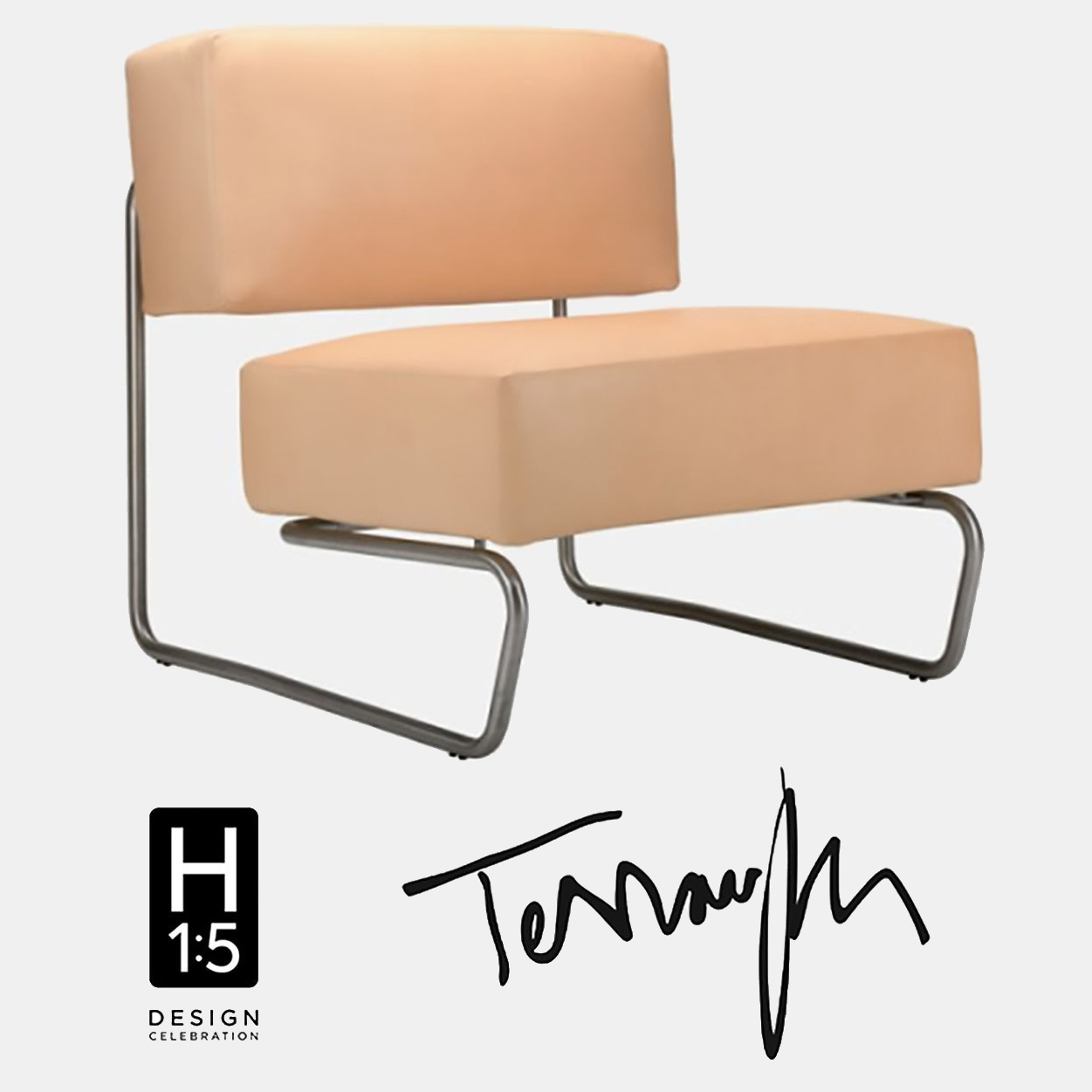
The result was a collection of previously unseen furniture designs that had remained on paper for more than eighty years: the GT.X armchair, the GT.Z monobloc cabinet and the GT.LUX lamp.
The GT.X armchair consists of two seemingly floating volumes, forming the seat and backrest respectively, suspended at their ends by a continuous steel profile. It is a striking example of structural contrast. The GT.X is also one of the early examples of modular design, reflecting Terragni’s innovative thinking about the way we inhabit space.
The GT.Z monobloc cabinet derives from an original, previously unpublished design by the master. It was conceived as part of an interior furnishing scheme for a private residence. Essentially, it is a freestanding partition that harmonises the different functions of an interior, serving both as a storage and display unit and as a personal dressing table.
The GT.LUX lamp features an adjustable arm balanced by sliding counterweights within its base structure.
This previously unpublished design interprets some of Terragni’s preparatory sketches for domestic furniture. Its underlying concept draws on the ideas of lightness and mechanical movement characteristic of the period, while responding to individual lighting requirements through adjustable height and intensity.
It is remarkable that these previously unpublished pieces of furniture, designed almost a century ago, remain so beautiful and relevant today. The light blue finish, for example, typical of the 1930s and now back in fashion, together with its minimalist design, makes the monobloc cabinet a timeless object that shows virtually no signs of its almost ninety-year history.
Leave a Reply