
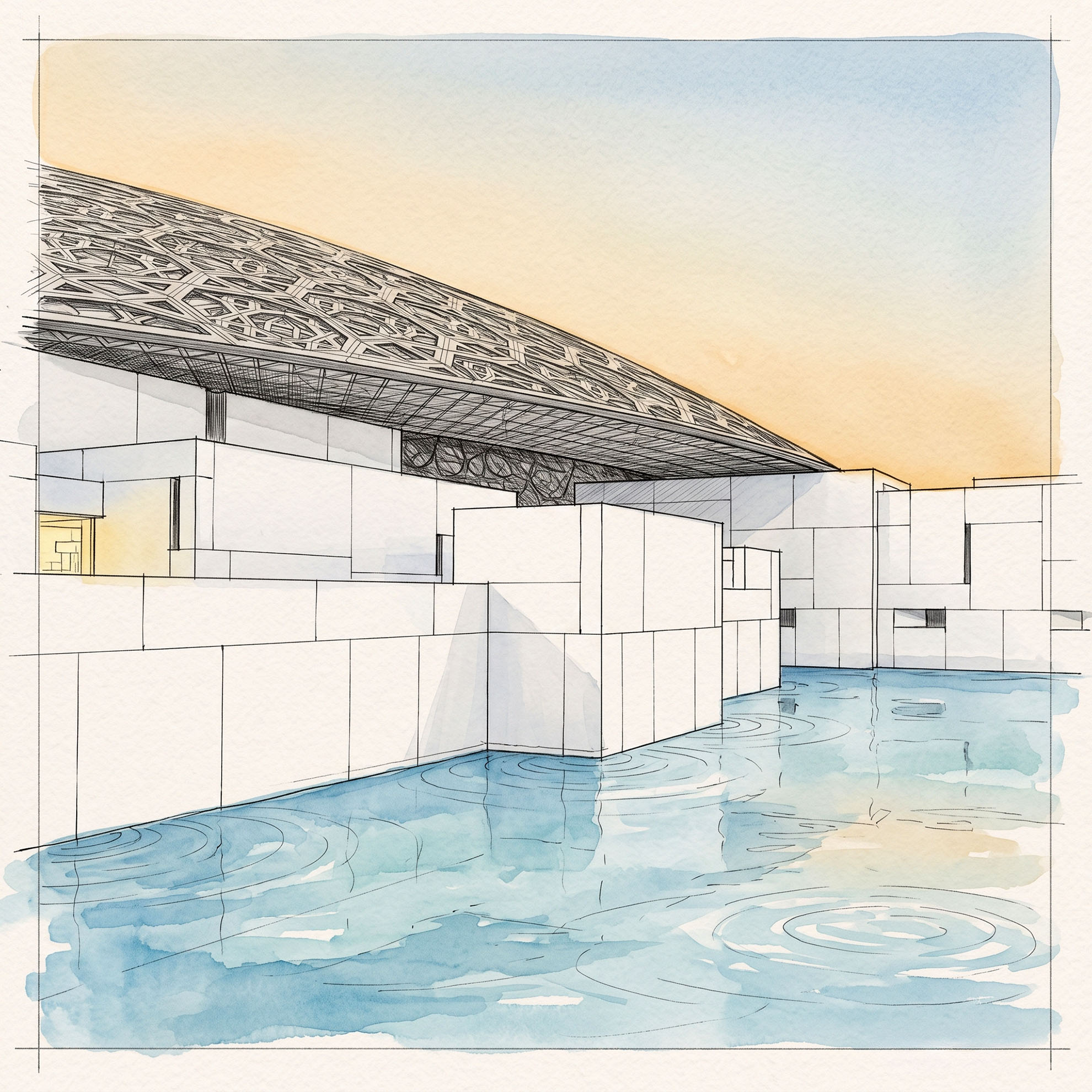
I consider Jean Nouvel’s Louvre Abu Dhabi to be the best building constructed and the most interesting attempt at a dialogue between cultures in the last 25 years
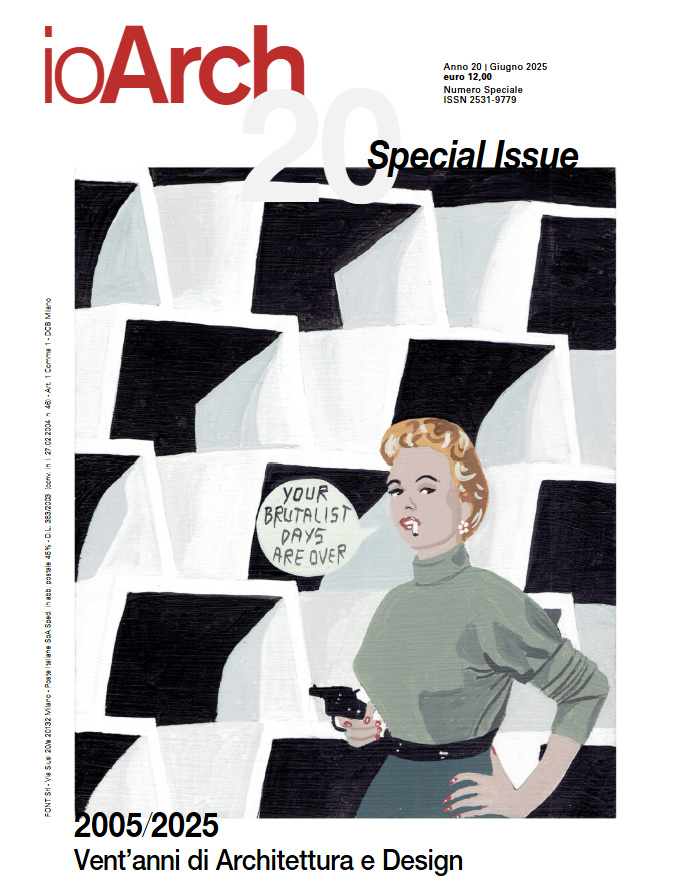
Part of the following text appeared in IoArch magazine in June 2025, for a special issue marking the magazine’s 25th anniversary, in which 30 Italian architects and critics were asked which building constructed abroad they considered the best of the last 25 years.
The feature was titled “Architecture — A Critical Survey.”
My original text:
Louvre Museum, Abu Dhabi
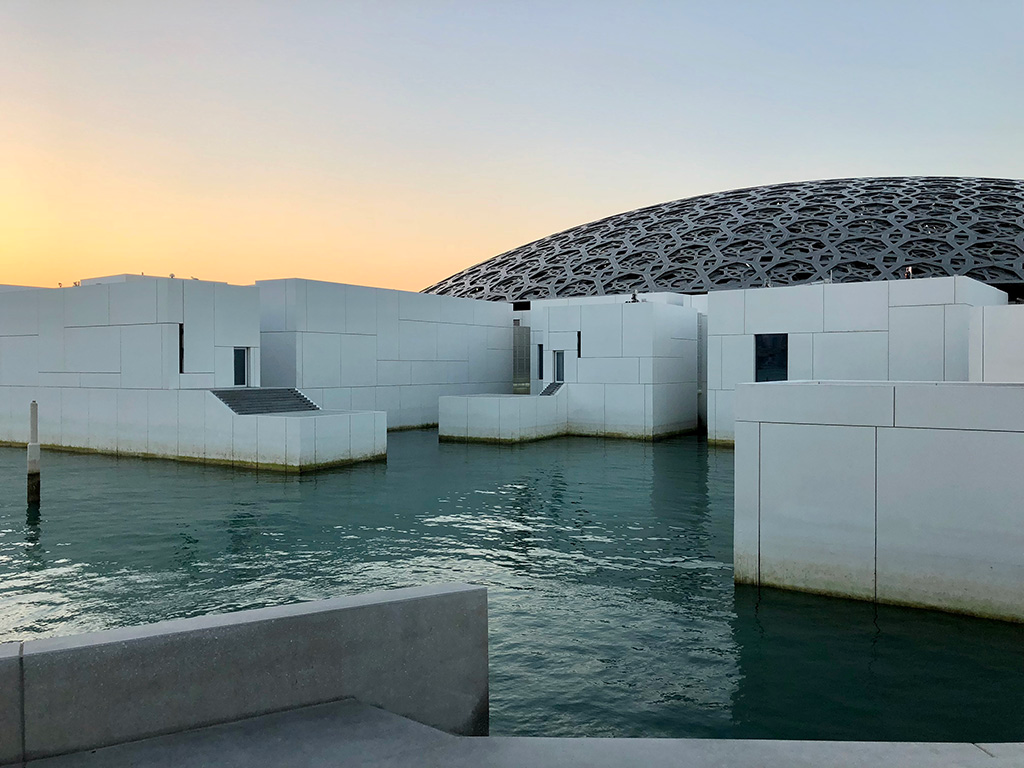
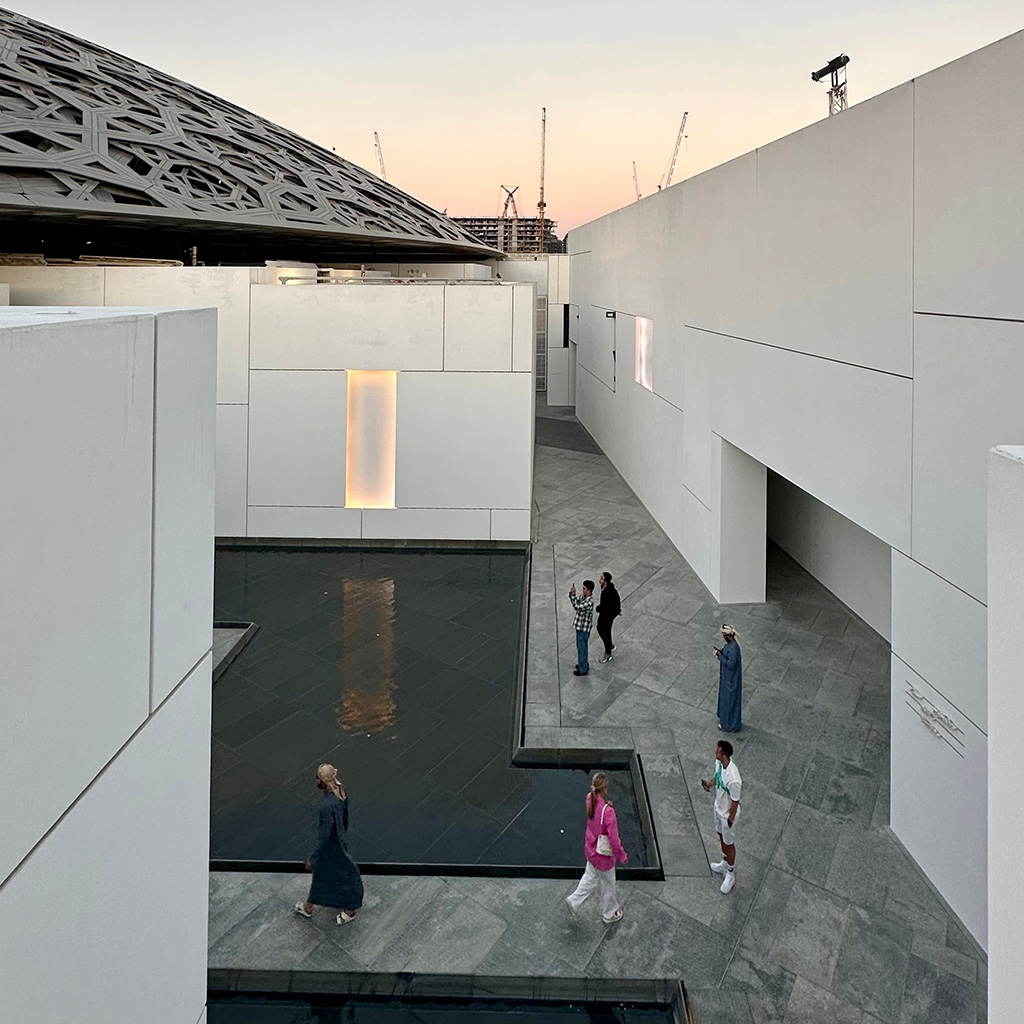
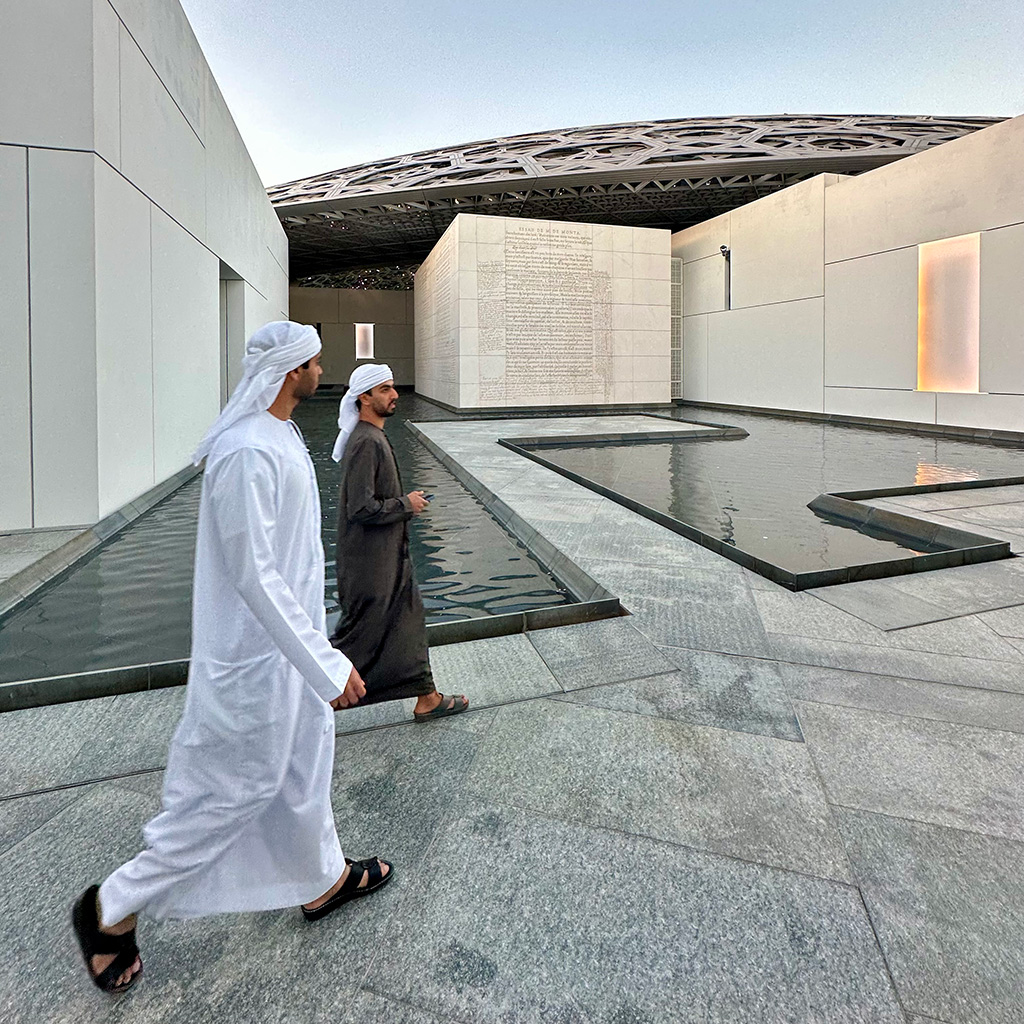
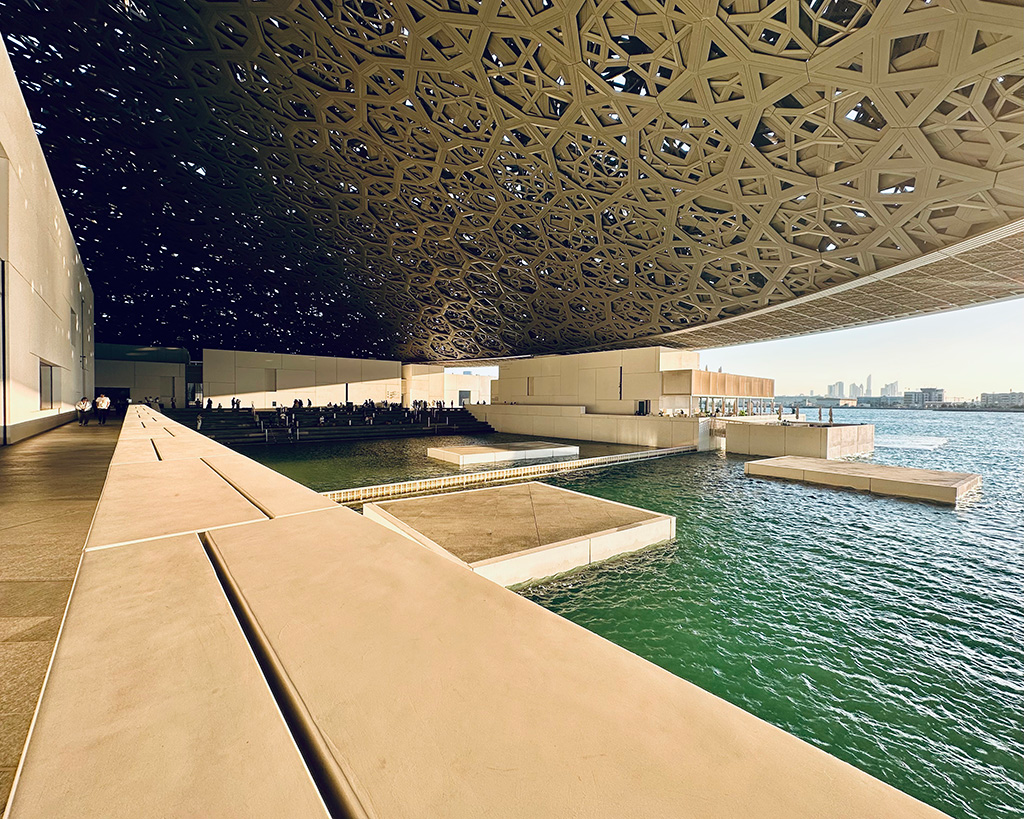
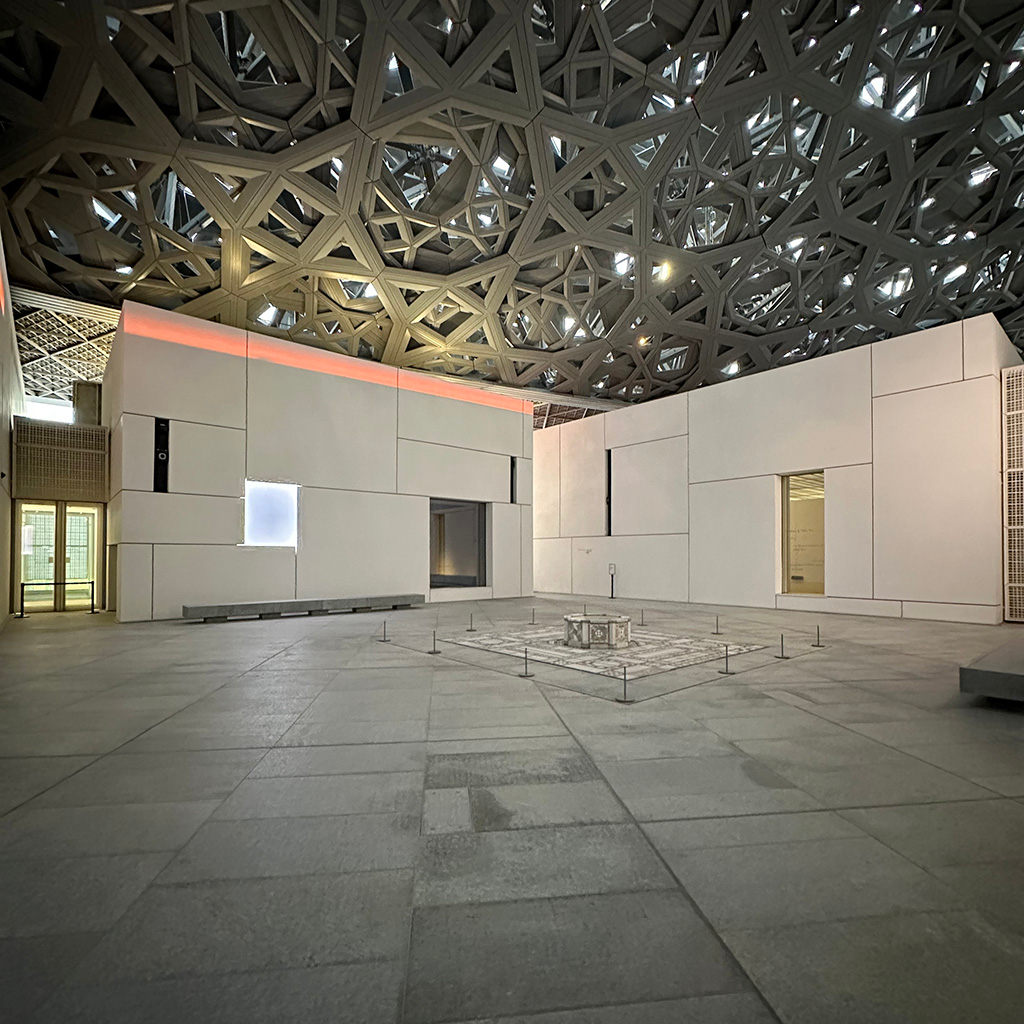
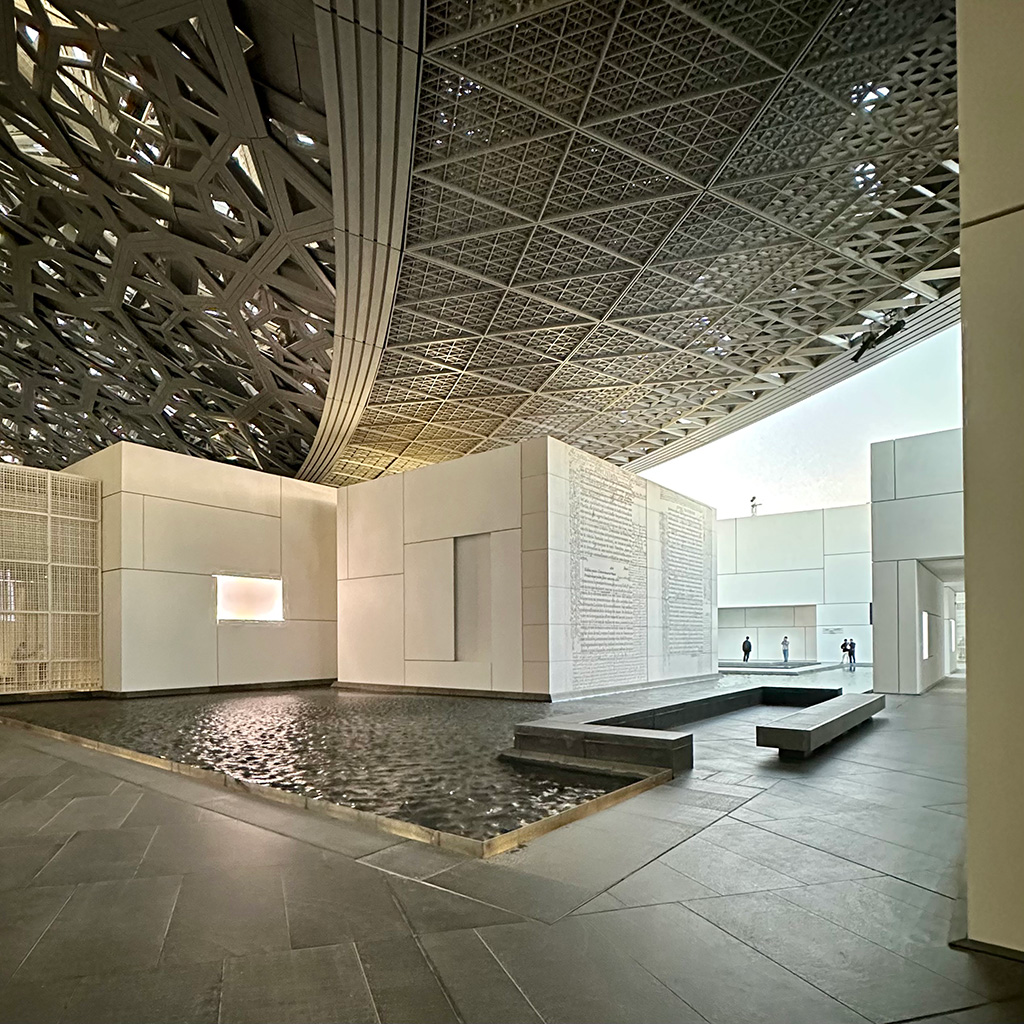
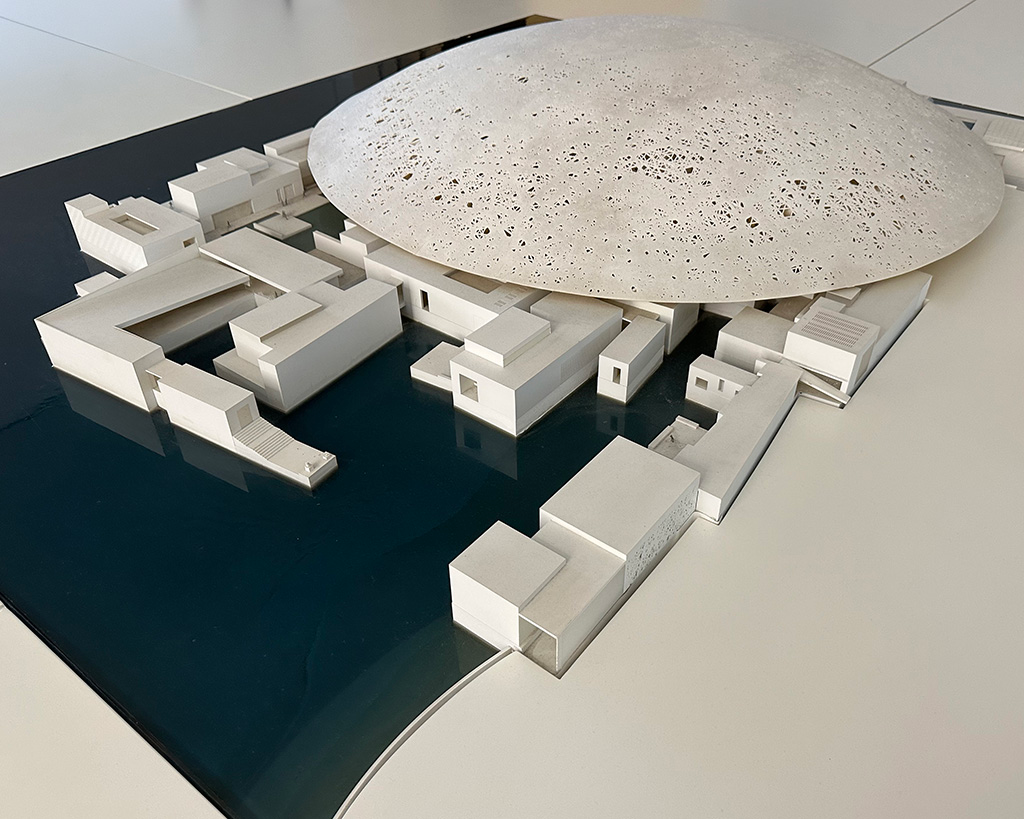
“The Louvre Abu Dhabi is among the most emblematic and successful projects in the dialogue between local culture and international architecture. The iconic dome, inspired by the local mashrabiya, creates a metaphysical yet unrhetorical indoor-outdoor space. The museum’s white volumes, essential and well-proportioned, are arranged in a plan that recalls traditional villages, generating an effective and measured museum route inside, and outside, in the shade of the dome, a sequence of minimal, interconnected spaces.”
That text was necessarily condensed for editorial reasons, and I feel it is worth adding here some further reflections on Nouvel’s design philosophy and on his forty-year-long relationship with Arab culture, which could not be included in the published piece.
I believe Jean Nouvel embodies a deeply intellectual approach to architecture, shaped by his rigorous training under Claude Parent at the École des Beaux-Arts in Paris, where he learned to question certainties and reject rigid stylistic formulas. For Nouvel, every project must be a response to its place — rooted in its cultural, climatic, and historical context rather than in a prefabricated visual language. This stance has led him to refuse any fixed stylistic signature, in contrast to other well-known architects. On one hand, this way of working has led him to build incredible, ever-different works of architecture; on the other, it makes him difficult to classify stylistically.
This philosophy is already evident in his early works, such as the Institut du Monde Arabe (Paris, 1987) and the glass pavilion of the Fondation Cartier pour l’art contemporain (Paris, 1994), where transparency and reflection create a continuous dialogue between interior, garden, and city, dissolving the boundary between art and urban life. The Institut du Monde Arabe in particular, designed together with Architecture Studio, marks a fundamental milestone in the development of Nouvel’s design philosophy and his relationship with Arab and Islamic culture: its façade system, with mechanized metal diaphragms, explicitly recalls the Arab mashrabiya and transforms it into an element of technological design.
At the Louvre Abu Dhabi, this line of thinking reaches its most mature expression — though not in the sense it is usually read. It is not the citation of the mashrabiya, in itself, that makes this work significant: it is the clarity with which Nouvel accepts a compromise that other architects would have refused out of stylistic pride. The museum’s functional core is deliberately Western in matrix — and in my view, rightly so. The Louvre Abu Dhabi is the first overseas outpost of one of the West’s most important museum institutions: it is reasonably expected to function well and to express that museographic vision. Had the objective been different, the commission would have gone to an Arab designer and a Middle Eastern institution. Nouvel’s task was not to “Arabize” the idea and function of the museum, but to build the place where two cultural grammars could occupy the same space without either erasing the other.
And this is where the project takes its greatest risk: a plan organized like a city, white volumes forming a traditional urban fabric, and above it all a dome that covers not a building but an entire city, as if it were itself one giant mashrabiya. The dome has been criticized for not being a structural element — but I don’t think that criticism holds up: why should it be? The mashrabiya, in Arab building tradition, was never a structural element; it is a filter, a diaphragm between public and private, between light and shadow. To ask Nouvel to make it structural would be to misunderstand what it is, not to correct an improper use of it.
This is why I consider the Louvre Abu Dhabi, beyond its technical, stylistic, and constructive merits, the most rigorously built attempt to bring two cultures into dialogue — stylistically, functionally, and conceptually — offering a possible response to one of the most pressing problems in contemporary architecture. After the glorious season of Modernism, when architects sought to shape citizens’ lives and societies through works often charged with political meaning, what is left of architecture today besides sterile stylistic disputes?
I believe that giving architecture a reason to exist beyond the question of style — the task of creating real opportunities for dialogue and cooperation between different cultures — may be one possible key to restoring value and meaning to architecture in the 21st century.

Leave a Reply