Collaboration: if there is one fundamental aspect of my work, it is this.
I published this piece in September 2021 in reFRAME 0 – Italian Magazine about Architecture, Art, Design and Real Estate.
After more than 20 years of practice across Europe, the Middle East and Asia, I find myself understanding and appreciating more and more the expression “from the spoon to the city” — a phrase coined over half a century ago by Ernesto Nathan Rogers of the BBPR group. In a single sentence, Rogers captures with a touch of irony what should be the spirit of the architect: something that once defined the approach of Italian architects, but also the flexibility of working method required to operate across very different design scales, with opposing approaches. From the way a designer works — weaving collaborative relationships with those who will manufacture the product, relationships rooted in artisanal memory — to the way an architect works as a conductor, overseeing large-scale projects.
Over time, these two aspects have become two fundamental pillars of my work, alongside the need for a vision that leads me to experiment beyond the boundaries of design and real estate, and that keeps me in a constant state of evolution. Meaningful collaborations, commitment and know-how in leading projects, a vision oriented toward evolution: I believe these are the essential tools for navigating the world of construction and design today, and for being ready for the scenarios that lie ahead.
Collaborations
The privilege of having worked in such diverse and culturally distant contexts has led me to appreciate, more and more, what it means to be an Italian designer with access to what is effectively an unlimited rearguard: collaborations with Italian studios, companies and brands operating abroad have consistently been the factor that allowed me to achieve the most significant results in my projects and built work.
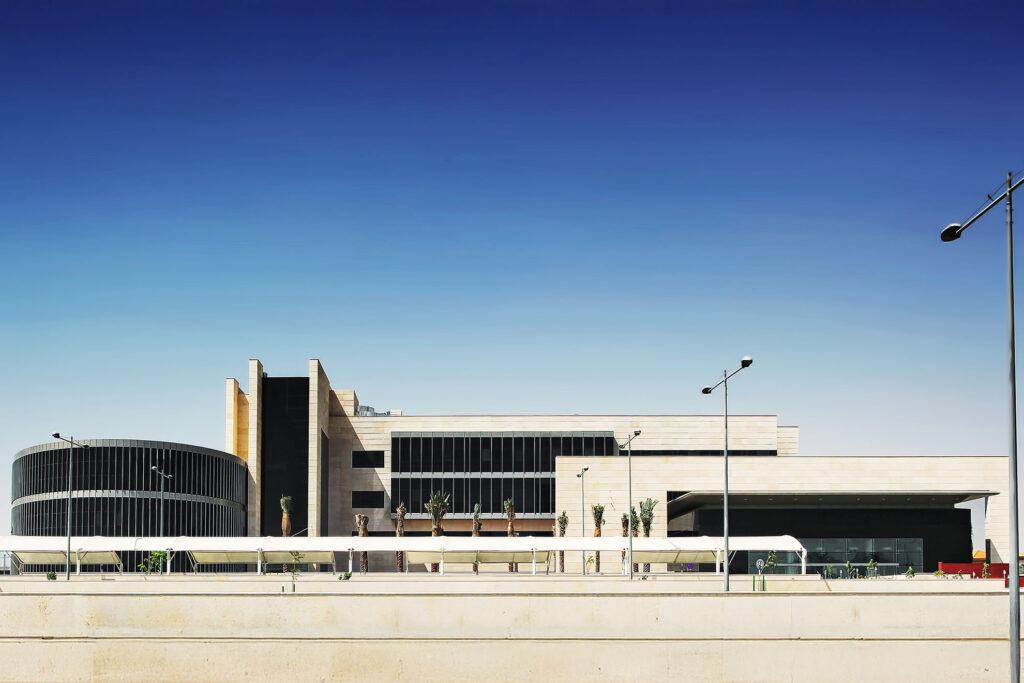
To give a concrete example, one collaboration I frequently mention is my long-standing relationship with Graniti Fiandre — a partnership of ten years that has produced excellent results through genuine design synergy. In 2011, we began exploring together the possibility of using their Active Surfaces technology — antibacterial and antiviral, anti-pollution and self-cleaning — for the entrance, common areas and cladding of the Al Qassimi maternity and children’s hospital in Sharjah, United Arab Emirates. At the time, antibacterial and antiviral performance was not considered a priority, and it was necessary to explain and demonstrate the advantages of this technology — in terms of hygiene and maintenance — multiple times to the representatives of the UAE Ministry of Public Works.
Thanks to Fiandre’s technical support, we succeeded in securing approval for the installation of over 4,200 square metres of high-performance flooring in place of the conventional granite or ceramic tile options. This also opened the door to an alternative architectural and aesthetic language, a departure from the dark or grey granite that has long been the standard for public buildings in the region. The hospital was thus able to achieve a coherent visual identity between exterior and interior: outside, a white stone facade contrasted against smoke-grey glazing; inside, in the common areas, white offset by clean linear black elements.
The 240-bed hospital, spanning over 43,000 square metres, was designed by myself and architect Dagmar Sestak — the result of a collaboration between UPA and General Planning — and built in compliance with international standards, including the AIA (American Institute of Architects) guidelines and JCI (Joint Commission International) accreditation standards.
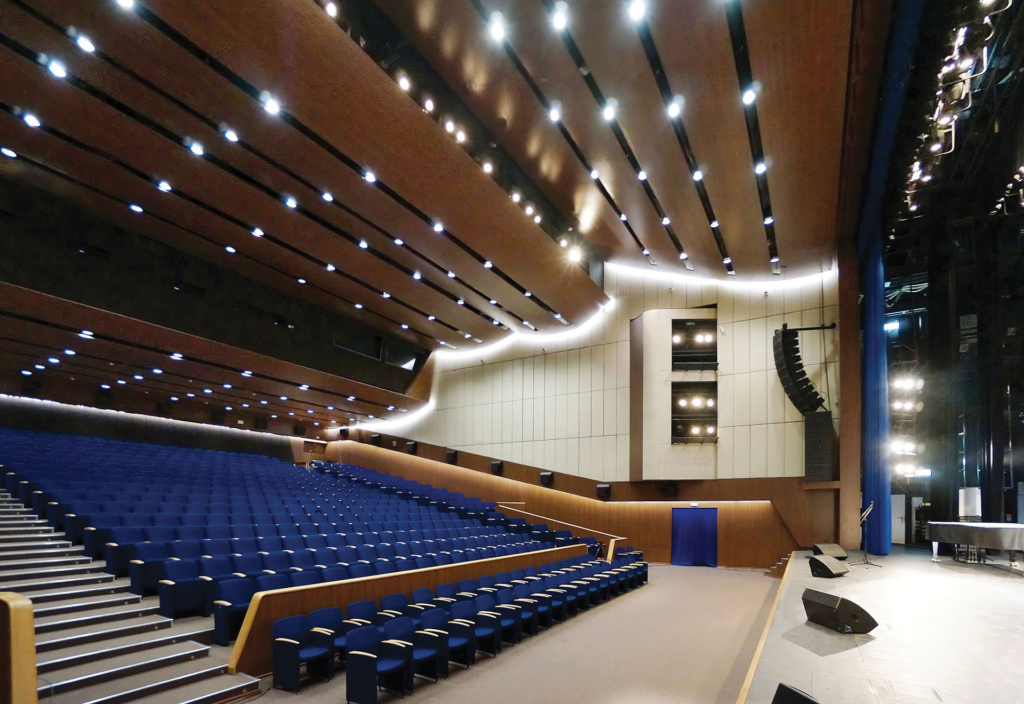
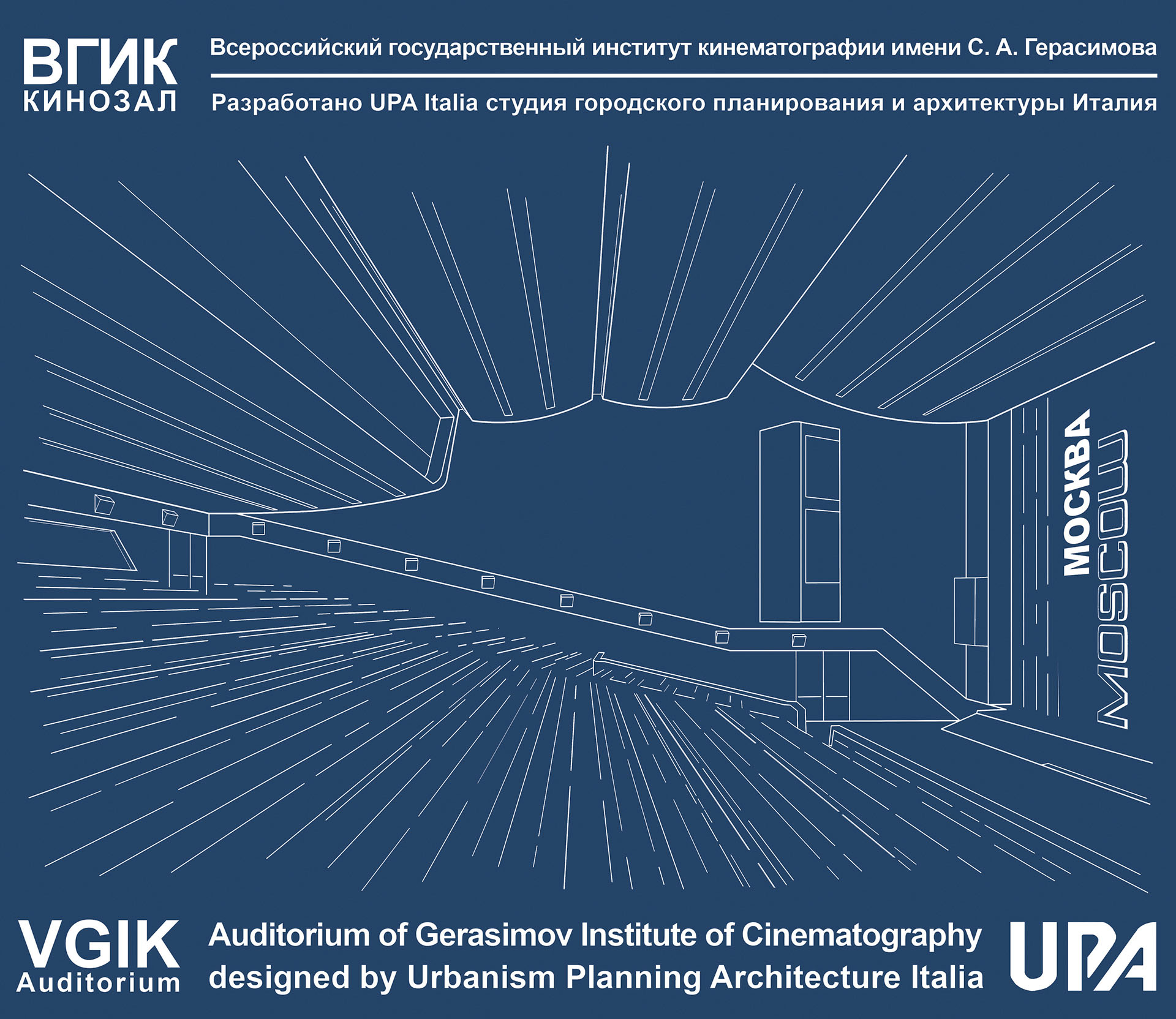
Another project in which collaboration proved decisive is the VGIK auditorium in Moscow — the first university of cinema in the world, founded in 1919. The project, developed with acoustic engineer Marcello Brugola, represents in my view a successful integration of design, engineering, craftsmanship and Italian companies who built the auditorium’s interiors.
The university needed an auditorium that would perform at the highest acoustic level as a cinema, a concert hall and a theatre — three uses with very different reverberation requirements. The central challenge was designing a large-volume space that could transition fluidly between these three configurations, while also achieving a modern and strongly recognisable aesthetic.
The hall was designed and built with an innovative system of rotating acoustic panels, digitally controlled by acoustic sensors. This system, combined with dedicated software, allows the acoustic configuration of the room to be modified in real time. The panels — engineered and manufactured in Italy by Consonica, upholstered in tensioned Trevira fabric — rotate according to the required acoustic setting (cinema, live music or theatre) and in response to audience size. The curved, organic forms of the ceiling were designed to achieve optimal acoustic refraction. This is the largest ceiling with curved surfaces ever realised using Topakustik acoustic slat panels.
Awareness
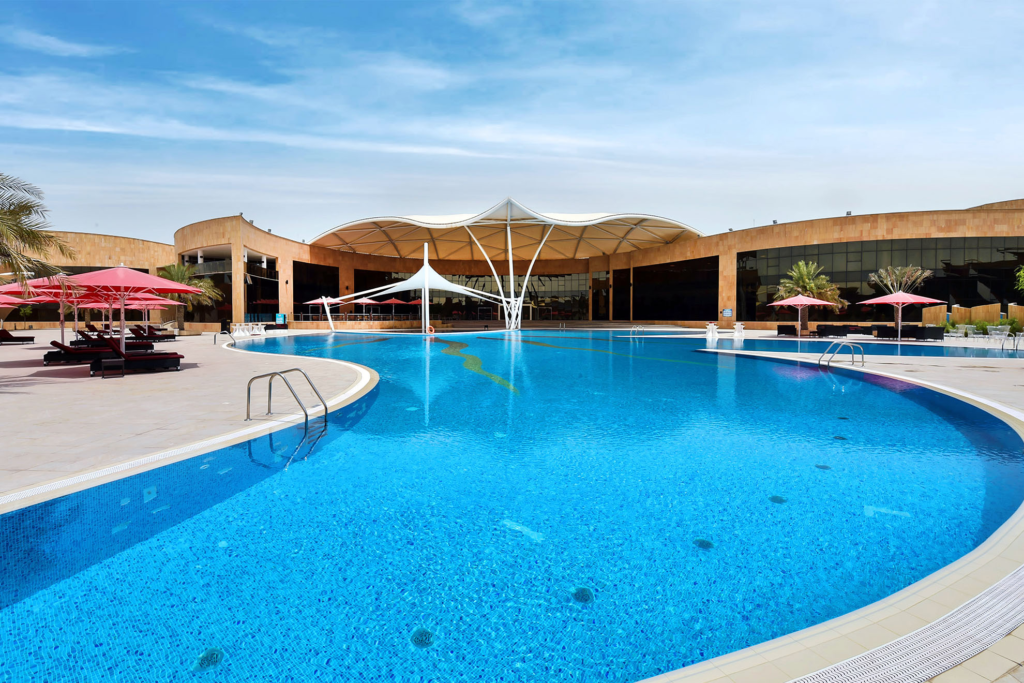
The Ladies Club project in Abu Dhabi brought me to a deeper awareness of what it means to be an Italian architect. This project — an exclusively female club in a world where the division between genders carries deep cultural roots — was conceived by the client as an iconic and one-of-a-kind work. It was designed in a very different moment from today: before the economic crisis that began in 2008–2009, the effects of which were felt in the UAE most acutely in the years that followed.
The women’s club, despite the many challenges encountered during construction — including a change of ownership and numerous design modifications requested on site — was eventually inaugurated in 2018. What I find particularly interesting is how the changes requested at different stages of the project reflect, in their own way, the social shifts that took place across the Gulf region over that decade. Initially conceived as a club with spaces for pursuits such as drawing and feminine hobbies, cafés and restaurants for socialising, and generous areas dedicated to traditional body care such as a spa and hammam, it gradually transformed into a sport- and fitness-focused facility, with entire zones converted into gym and athletic spaces — reflecting a distinctly more modern and Western sensibility.
Conceived as a project rooted in organic architecture and parametric design — at least in plan — it was the result of Italian and international collaboration: the design was developed together with Iraqi architect Aswan Zubaidi, my partner in Abu Dhabi, and in part during the preliminary phase with Australian architect Tony Owen, alongside a multicultural design team distributed across Italy, various locations in the UAE, Egypt and Australia.
Here too, the support of numerous Italian brands proved essential — enabling a project that came very close to being stripped of much of its identity, particularly in the areas of finishes and interior design.
Challenges
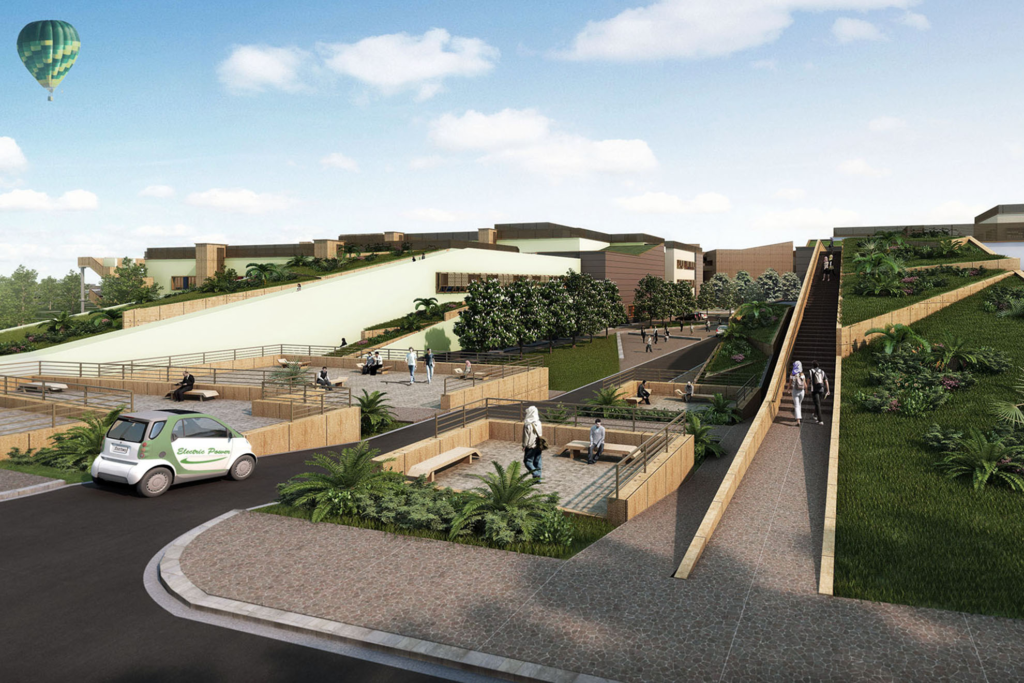
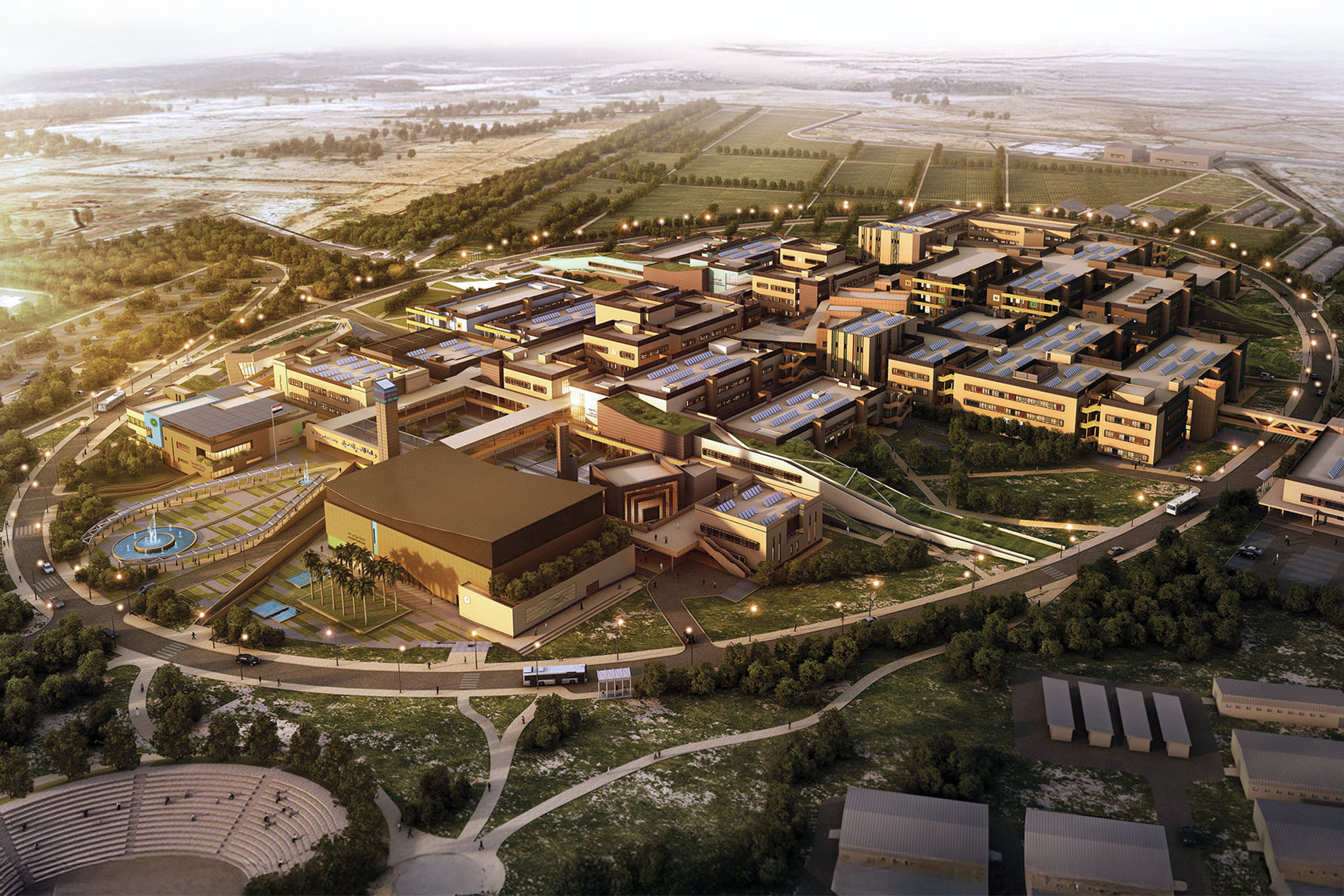
A spirit of design research, curiosity and the constant need to respond to new demands have led me to take on a wide range of challenges over the years. Designed from 2011 following a won invited competition, the university campus of Al-Qasim University near Babylon is the first sustainable project registered and certified under the American green building protocol LEED — Leadership in Energy and Environmental Design — in Iraq, achieving Gold level certification.
The project comprises a campus for five faculties — veterinary medicine, agriculture, environmental sciences, biotechnology and food production — along with a full range of support facilities including a veterinary hospital, student housing, a sports centre, a canteen, a mosque and others. The campus consists of thirty-five principal buildings totalling over 185,000 square metres, set within a site of nearly one million square metres.
The project demanded coordination across multiple fronts, with teams distributed between Milan (architecture, coordination and project management), Abu Dhabi (architecture and building services), Baghdad (client relations), Dubai (LEED consultancy and landscape architecture), Sharjah (structural engineering), Cairo (structural engineering), Budapest (infrastructure and roads), Beirut (quantity surveying), New Delhi (executive documentation) and Shanghai (visualisation). The support of multiple international professional studios and Italian brands — including Fiandre Architectural Surfaces, which assisted in the selection and documentation of LEED-certified materials — allowed us to bring the project to completion despite the geopolitical upheaval in the region from 2014 onward, following the rise of ISIS.
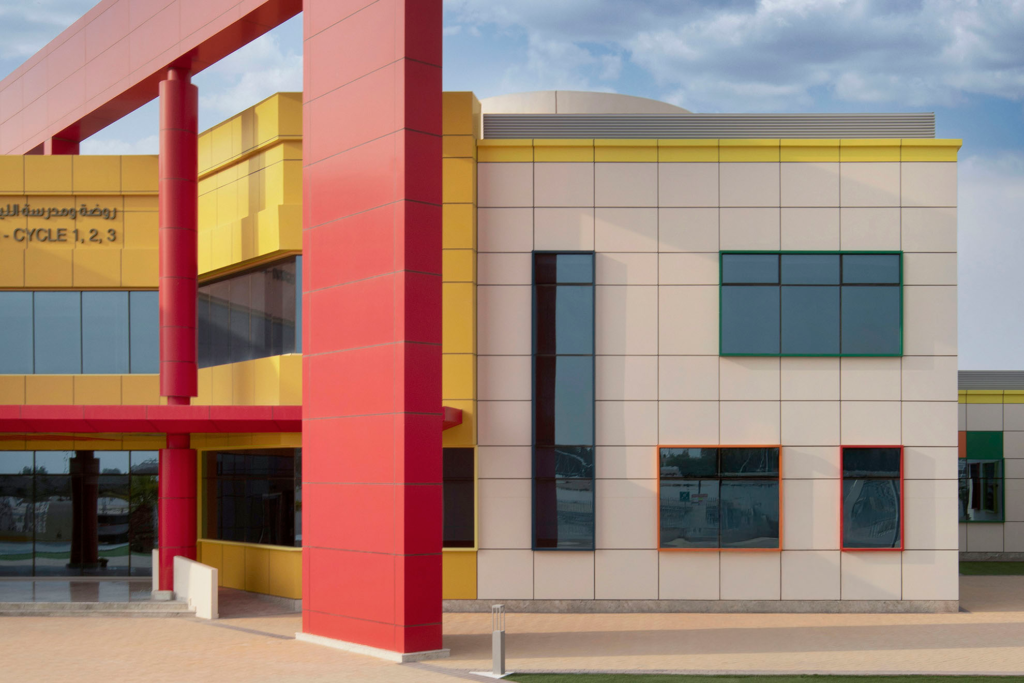
The evolution of digital tools for design and remote collaboration led us in 2015 to undertake — on behalf of the local Ministry of Public Works — the first public project in the United Arab Emirates developed in BIM (Building Information Modelling): the female school for students with special needs and disabilities, and the Al Lesaili nursery in the Emirate of Dubai, designed collaboratively between Milan and Dubai to international standards.
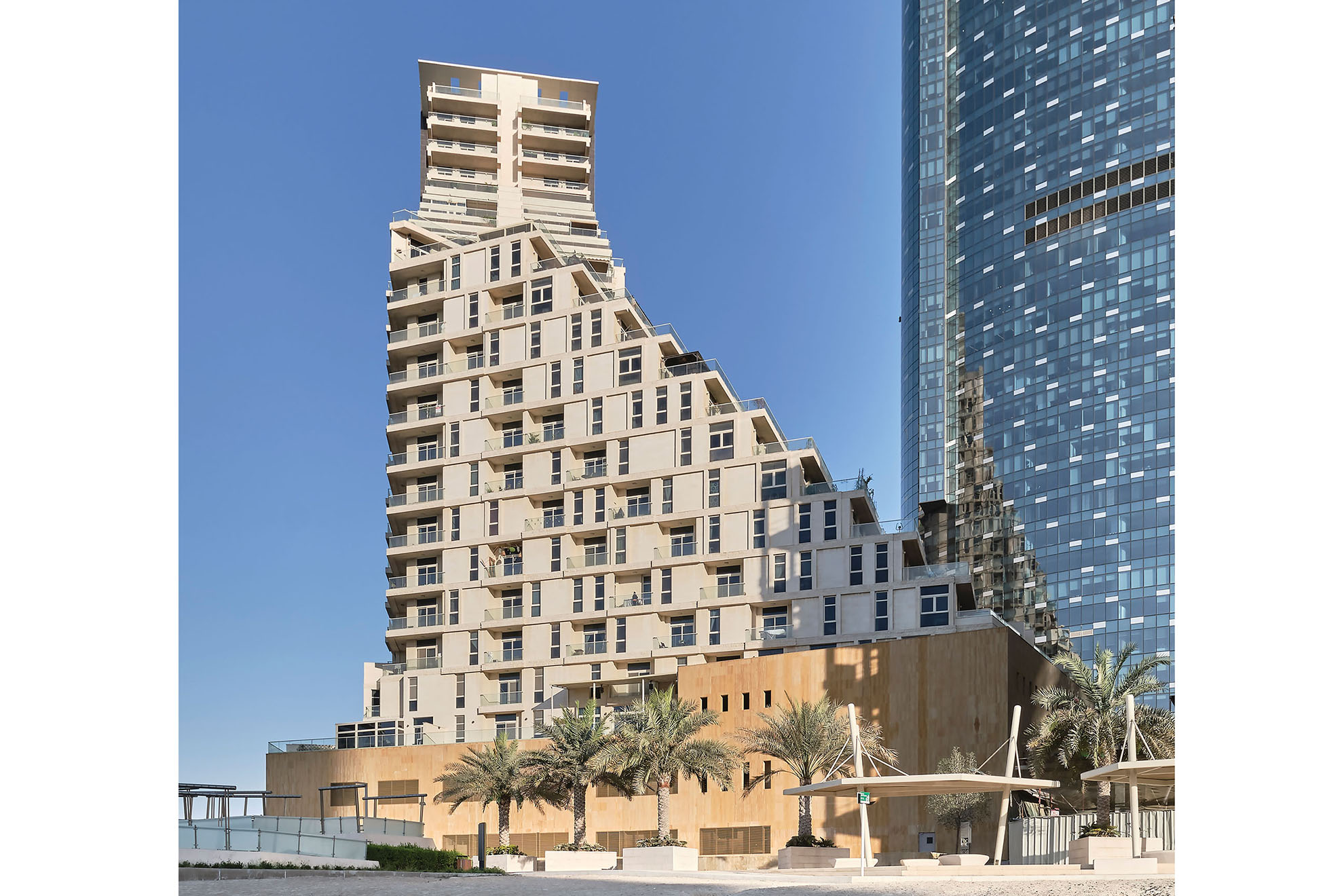
A project that carries no particular technological innovation or records, but was designed with a clear ambition to distinguish itself from the surrounding built environment, is the Mangrove Place tower — a nearly 500-apartment residential building on Al Reem Island in Abu Dhabi. The twenty-nine-storey tower, designed together with architect Aswan Zubaidi, is the only tower in its context featuring terraces and openable windows, surrounded by apartment buildings sealed as hermetic glass boxes. In a region where for five months of the year outdoor evening dining is entirely comfortable, the absence of a terrace or at least an openable window always struck us as a fundamental design failure. The inability to open a window to change the air — something I experienced firsthand, fortunately only briefly, in similar buildings across the Middle East — always felt to me like a fundamental lack of respect by the designers toward the people who would actually live there. The decision to equip many apartments with generous terraces gave rise to a stepped massing that defines the building’s character, in sharp contrast to the surrounding towers. Here too, the support of Italian companies and collaborative relationships proved essential.
Finally, research into fields adjacent to construction and design has led me to explore unconventional collaborations — among them, supporting the real estate component of an innovative start-up, BrikBit Digital Shares, in the development of a blockchain-based real estate platform in 2018.
Evolution
The construction sector is undergoing profound transformation today, but I believe the most significant changes are still ahead. What the past year has brought has effectively propelled us perhaps five or ten years forward in our use of digital tools and in certain social shifts. The response will certainly not be limited to rethinking workspaces and addressing spatial design challenges. The changes driven by the digital revolution will touch other domains that will in turn reshape the worlds of design, construction and real estate. The concept of ownership as we currently understand it will shift from possession to use: homes may come to resemble residences in which one holds a share that grants access to a space as a service. Notaries as we know them today — facilitating property transfers — may become obsolete, replaced by new blockchain-based systems. As is already beginning to happen in the United States with the first fully online interior design services, the design process itself may become entirely remote, without ever requiring a visit to the physical space. Another transformation already underway in the United States is the consolidation of development, construction and architectural practice — with real estate and construction companies absorbing design studios and estate agencies.
Without venturing quite so far into the future, I believe that in the years ahead, only an approach that combines the sensibility of a designer with the authority of a conductor — paired with a forward-looking vision open to experimentation and cross-contamination — will allow Italian studios and architects to compete with the major design firms of the Anglo-Saxon and Asian worlds. Collaboration at every level will only become more essential.