Approach
Design Philosophy – Modern Architecture Rooted in Context and Culture
I believe that modern architecture must emerge from a deep understanding of context, function, and culture. Each design begins with listening — to the site, to the client, to local materials and traditions. From this foundation, form and space take shape in a way that feels both grounded and contemporary.
My process is multidisciplinary. I collaborate closely with engineers and experts, interior designers, landscape architects, and artists to ensure that every project is coherent in concept and detail. I draw from experience in architecture, urban design, real estate, and product design to create integrated, flexible solutions.
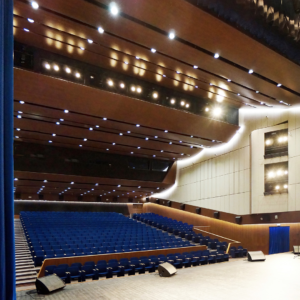
The diversity of my projects reflects this philosophy. From a hospital in the Middle East to an auditorium in Russia, from a hotel in Central Asia to a villa in the Mediterranean, each work is the result of a specific narrative — a synthesis of place, function, and identity.
I see architecture not as a static object but as a living system — capable of evolving with time and responding to future needs while maintaining its cultural essence.
Forms Follows Functions, Will and Context
Architecture finds its meaning where context, intention, and function converge shaping form through culture, performance and place
In the 21st century, the traditional principle of form follows function is no longer sufficient to address the complexity of contemporary architectural practice. Today’s design challenges require a broader and more articulated vision, capable of responding not only to functional demands, but also to cultural, environmental, and social conditions.
In my work, architectural form is never an autonomous gesture. It emerges from the convergence of functional typology, environmental setting, cultural framework, and the will of the actors involved and above all, the designer. Equally central is the level of sustainability a project must achieve, understood in social, economic, and environmental terms.
Architecture, much like clothing, adapts to context and purpose. An evening suit belongs to a ceremony, casual wear to leisure, and technical gear to sport. In the same way, architectural language must be appropriate to its use and circumstances. Design, therefore, is not a matter of stylistic preference, but of coherence.
When a building is defined by high functional and technical requirements — such as hospitals or complex infrastructure — its design is guided by rational principles related to performance, efficiency, clarity, and the use of standardized and reliable technologies. In these cases, modularity, precision, and operational logic shape the architectural expression.
Conversely, buildings intended for cultural, recreational, or symbolic purposes — such as museums, clubs, or resorts — require a higher degree of expressiveness. Here, architecture becomes more narrative and experiential, emphasizing perception, light, symbolism, and emotional engagement. Form is allowed greater freedom, while still remaining grounded in context.
This dual condition between logic and expression, discipline and freedom define my architectural approach. Each project seeks its own balance, where function structures the design logic, intent guides meaning, and context shapes identity. For this reason, I adopt a broader and more contemporary principle: Form Follows Context, Will and Function.
Italian Design Heritage and Local Identity
Exporting italian architecture means redefining its elegancethrough dialogue with local cultures, not reproducing its forms
Another key aspect of my work has always been the ambition to bring the elegance of contemporary Italian architecture to an international context — not by replicating it, but by redefining it.
Throughout history, Italian architects have worked abroad, blending Italian sensibility with local traditions to create new and unexpected architectural languages. A remarkable example is the group of Italian architects who contributed to the Kremlin in Moscow between the 15th and 16th centuries: buildings that clearly echo Italian formal logic while integrating local construction methods and aesthetic influences.
For me, exporting Italian architecture does not mean reproducing what is built today in Milan or Rome. It means reinterpreting and evolving Italian architectural elegance — its attitude, conceptual clarity, refinement, and spatial intelligence — and merging these qualities with local customs, materials, and cultural expressions. In this sense, Italian design becomes a flexible framework rather than a stylistic formula.
My goal is to create architecture that mediates between Italian design culture and the specific characteristics of the place where it is built.
This involves drawing inspiration from the local environment, understanding needs and habits, and responding to environmental and social conditions. The result is architecture that is simultaneously site-specific and culturally hybrid, yet unmistakably rooted in an Italian way of conceiving space.
In this way, Italian design is not a fixed aesthetic but a method — a process that values context, elegance, proportion, and cultural responsiveness.
Through this approach, I aim to redefine Italian architectural elegance in a global perspective, allowing it to evolve while remaining deeply connected to its heritage.